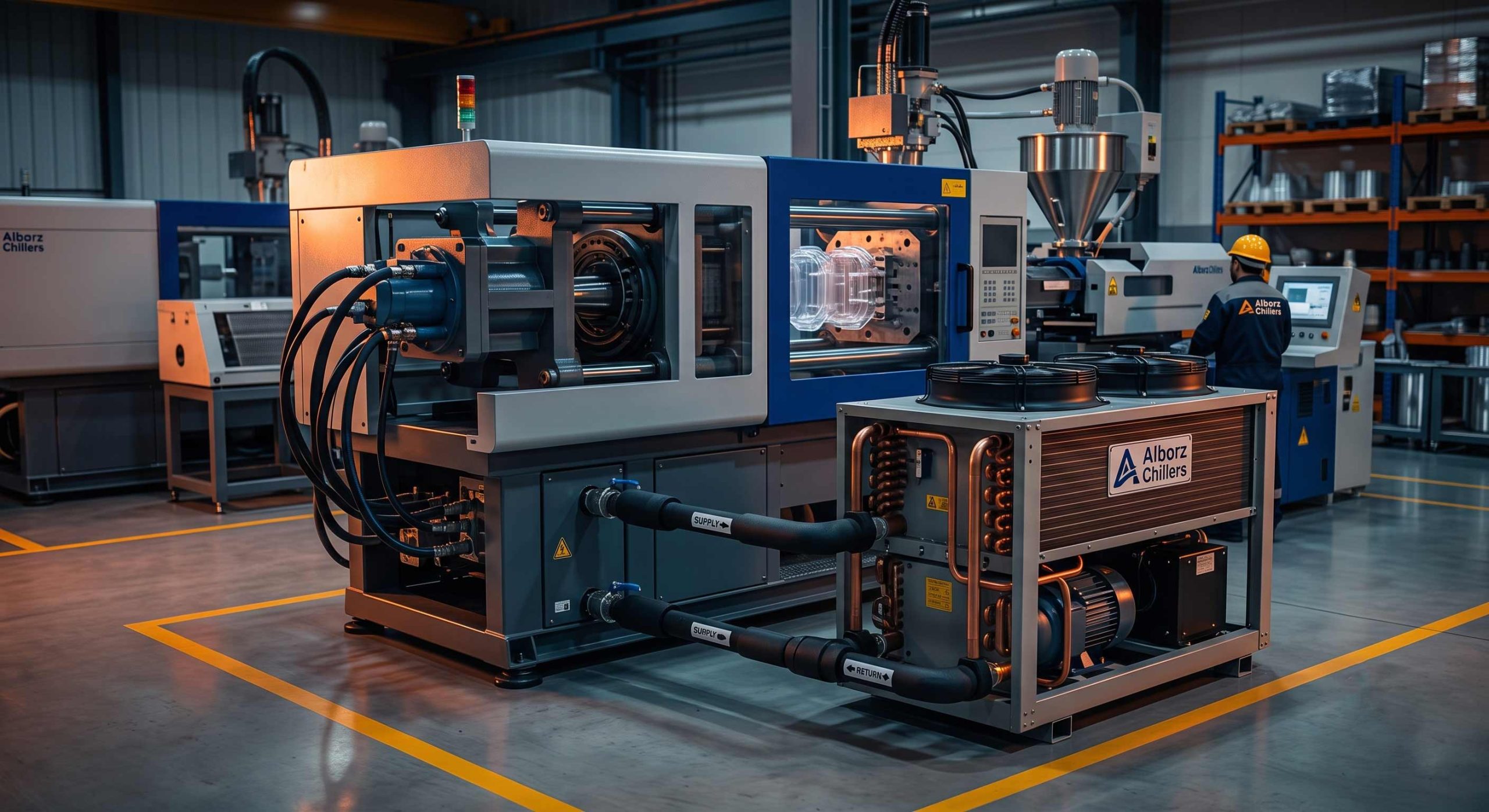
In plastic injection molding, speed and part quality are everything. Molten plastic enters the mold at a high temperature and must lose that heat as fast as possible to set into a stable part. Without a properly engineered chiller, cycle times grow and parts warp. This article from the Alborz engineering team explains what a compression chiller does on a plastics line.
The two jobs of a chiller on an injection molding machine
1. Mold cooling
More than 80% of a typical injection cycle is spent cooling and solidifying the plastic in the mold. Chilled water from the chiller circulates through cooling channels in the mold and carries the heat away to the refrigeration cycle. A correctly sized chiller keeps cooling time to a minimum and raises daily output.
2. Hydraulic oil cooling
Hydraulic machines generate high pressures to close the clamp and move the screw, and the oil heats up. If the oil goes above its allowed temperature (often around 45–50 °C), its viscosity drops and the hydraulic pumps can be seriously damaged. The chiller sends cold water to the oil cooler and keeps the hydraulic system at a stable temperature.
Why a building (HVAC) chiller is not enough
- Duty cycle: industrial chillers are built to run 24 hours a day, all year, in dusty and oily workshop air.
- Load swings: the heat load on a molding line changes from moment to moment. Industrial chillers need fast capacity control to handle these swings. On Alborz chillers with several compressors, capacity is stepped by switching compressors on and off.
- Robust evaporators: industrial evaporators, especially shell-and-tube types, have more open water passages and tolerate dirty process water better.
How to size a chiller for injection molding
Capacity depends on the machine's shot size, the polymer (PE, PP, PET and others), the target cycle time and the hydraulic system. As a rough rule of thumb, allow about 1 ton of refrigeration for every 10 hp of hydraulic motor for oil cooling. Mold cooling is calculated separately from the throughput of plastic. For a water circuit, check the result with Q = ṁ · cp · ΔT. Send us the machine list and our engineers will calculate the load.
A typical Alborz selection for small and medium molding shops is an air-cooled unit such as the 10-ton or 15-ton chiller, whose separate compressors follow the changing load.
Frequently asked questions
Air-cooled or water-cooled for a plastics plant?
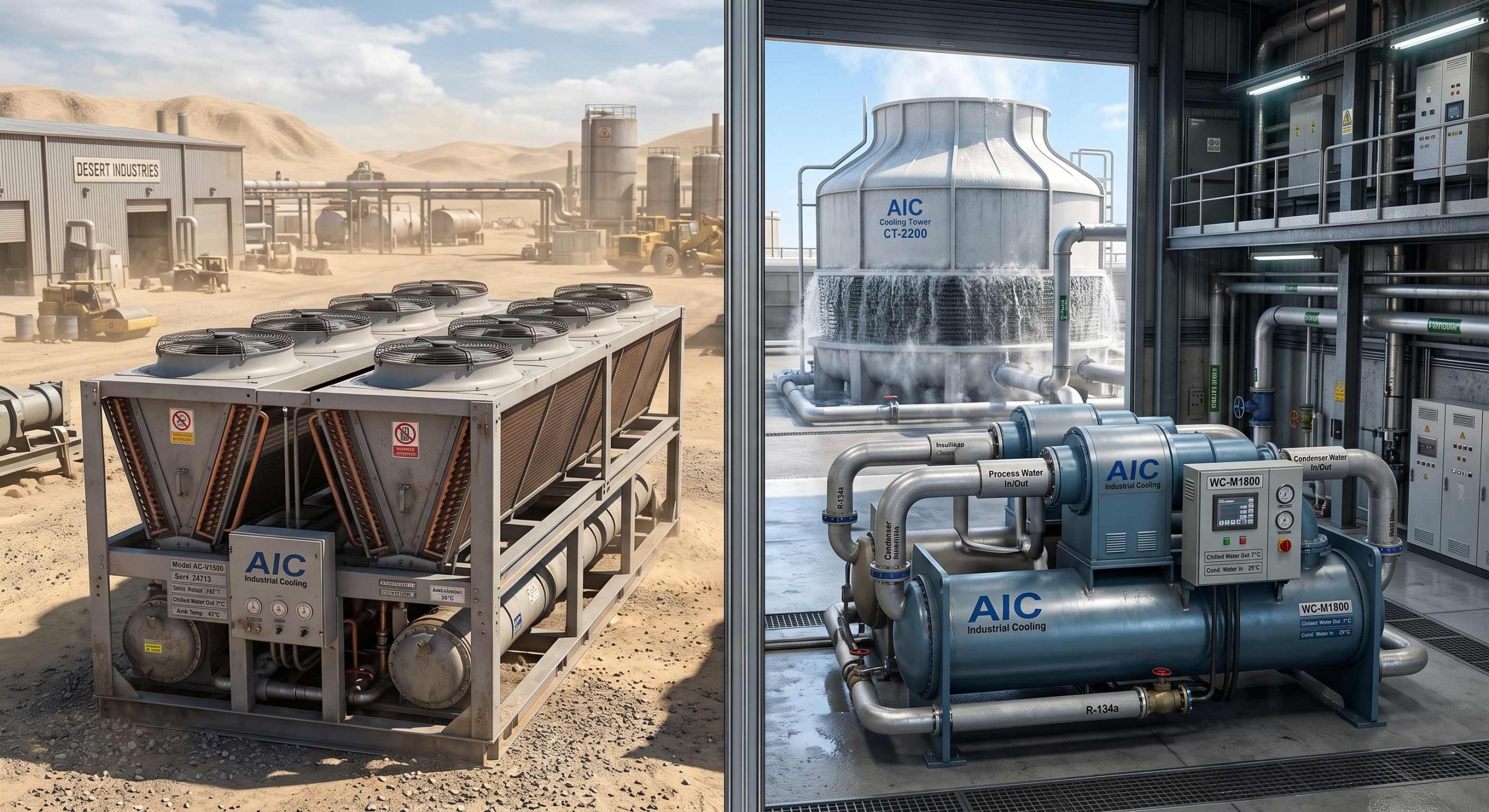
Plastics plants are often in industrial parks with limited water, and polymer dust in the air makes cooling tower water dirty quickly. That is why we usually recommend air-cooled compression chillers, which avoid tower scaling problems. See air-cooled vs water-cooled chillers.
Why do parts warp after leaving the mold?
Mostly because of uneven or insufficient mold cooling. If the chiller cannot deliver water at a stable temperature and with enough flow, some areas of the part solidify later, which causes warpage and poor surface quality.
Can one chiller serve several machines?
Yes. A central chiller with a chilled water loop can serve several machines, as long as the total heat load and the flow to each machine are calculated. For a complete checklist, read the industrial chiller buying guide.
Was this article useful?
Thanks for the feedback.
Ask an engineer
Write your question about this article. Questions are not made public; only the ones that get an answer appear here, without your email.